English (英语) | Chinese (中文)

The Penans - Sarawak


| packages & accommodation ...

Penan Huts

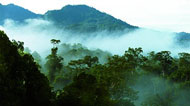
The Penans ancestral grounds are in the dense jungle forests where the controversial Bakun Dam is located. The Penans are nomadic people and are one of the very few nomadic tribes in Borneo . In the 1860's Odoardo Beccari, a renown botanist remarked that the Penans were man-hunters which is to say that they had no qualms about slaying any human beings in which they had no dealings with. The Penans only took belongings of the slain person and since they were nomadic, had no use for head trophies.
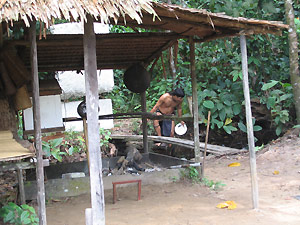
They build basic structures that resemble a makeshift hut which is used from a few weeks or some months until their food supply around the area runs dry especially the wild sago palm which is their staple diet. Unlike all the other natives, the Penans do not cultivate padi or perform any form of cultivation. They support themselves by hunting with the blowpipe, gathering the wild jungle fruits and sago, and by collecting the jungle products and bartering. A group normally numbers between 20 to 30 people ie the chief and his descendants. The penans are fiercely proud of their heritage and existence. Unfortunately, their ancestral grounds are under constant threat of diminishing due to its diversity and natural bounty. Many remain true to their lifestyle and would like to see some of their ancestral ground protected from the logging and expansion of palm oil plantations that are eating up the rainforests and their ancestral lands. For more information on the Penans , log onto Friends of the Earth,Malaysia. The Penans are losing their identity not by choice and your voice can make a difference to them. Help give them a voice.

The Sumpitan or Blowpipe

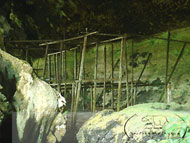
The Blowpipe or Sumpitan as called in Malay is made by Kayans, Kenyahs, and Penans but rarely by Ibans. The highly valued sumpitans are made from the Jagang tree. Hardwoods like the Jagang tree are normally difficult to carve. Generally, a large girth tree is felled, and the trunk is cut to long pieces of about 8ft. The piece is shaped cylindrical with an adze and reduced until 3 - 4in in diameter. The craftsman then erects a platform about 7ft above the ground. Charles Hose describes the process,' the prepared rod is fixed vertically with the upper end projecting through the platform, its lower end resting on the ground. Its upper end is lashed to the platform, its lower end to a pair of stout poles lashed horizontally to trees, and its middle to another pair of poles similarly fixed. The next operation, the boring of the wood, is accomplished by the aid of a straight rod of iron about nine feet long, of slightly smaller diameter than the bore desired for the pipe, and having one end chisel-shaped and sharpened. One man standing on the platform holds the iron rod vertically above the end of the wood, and brings its sharp chisel edge down upon the centre of the flat surface. Lifting the rod with both hands he repeats his blow again and again, slightly turning the rod at each blow. The rod soon bites its way into the wood. An assistant, squatting on the platform with a bark-bucket of water beside him, ladles water into the hole after every two or three strokes, and thus causes the chips to float out. This 0peration steadily pursued for about six hours completes the boring. By boring the lower part, the craftsman aims at producing a slight curvature of the tube by very slightly bending the pole and lashing it in the bent position; the pole on being released then straightens itself, and at the same time produces the desired slight curvature of the bore. This curvature is necessary in order to allow for the bending of the blow-pipe, when in use, by the weight of the spearblade which is lashed on bayonet-fashion.'

The shaft of the poisoned dart is made from the wood of the NIBONG and wild sago palms. It is about nine inches in length and one-sixteenth to one-eighth of an inch in diameter. The poison is made from the sap of the Ipoh tree(ANTIARIS TOXICARIA). The sap is heated over a fire until it becomes a dark purple paste.

Clothing

The native cloth, worn by almost all natives in the Borneon jungle was called the chawat. It is made from the bark of trees namely the KUMUT, the IPOH , and the wild fig. The material used is the fibrous layer underneath the outer bark. The fibrous layer is beaten with a heavy club until is pliable and then the piece is cut according to shape and size. Today, such material has been replaced with cotton.

Being nomadic, the Penans eat almost anything the jungle has to offer except the omen birds, birds that the natives believe bring them warning signals etc. however, the one beast - the crocodile seems to be regarded as a god by the Penans. It's been recorded that the Penans do sometimes carve crude wooden structures of the beast and hang it at their hut or shelter. At any time that anyone should fall ill, the medicine man would hang the blossom of a betelnut tree with the wooden image to aid him in calling back the wandering soul of the patient.


on the orang ulu...

Orang Ulu Longhouse  

The orang ulu are made up of a few tribes namely the Kenyah, Kayan, Klemantan, Kelabit, the Lun Bawang, Penan as well as a few minor tribes in the interior. Orang Ulu, means the "up-river dwellers" mainly living in Central Borneo , which accounts for 5.5% of the population. The Penan, Kayan and Kenyah, live in the middle and upper reaches of and the Kelabit and Lun Bawang live in the highlands.

The Kayans live in the main territories in central Borneo . They are warlike , conservative and religious people. The Kayan are considered more skilled in handicraft then all other peoples and believed by early anthropologists to be the original people in Sarawak who adorned their bodies with tattoos. The Kenyahs are found mainly in the highlands a little north of the centre of Borneo . As recorded in The Pagan Tribes of Borneo,'Physically they are without question the finest people of the country. Their skin-colour is decidedly fairer than that of Sea Dayaks or Kayans. They are of medium stature, with long backs and short, muscular, well-rounded limbs; a little stumpy in build, but of graceful and vigorous bearing. They are perhaps the most courageous and intelligent of the peoples; hospitable and somewhat improvident, sociable and of pleasant manners.'

The Kenyah are knowned for their handicraft work especially in making baskets, mats and weapons and tools like blow-pipes, and the implements used for working the wild sago.

All the Orang Ulu tribes except the Penans build houses of similar architecture but the finishing and skill differs widely. The houses are always located close to rivers. The as of the Ibans, are built to accommodate the villagers and were built for as many as one hundred families in the old days. The longhouse is normally supported on stilts made from Berlian or Ironwood which rise some 20 - 30feet high. The roofing was also made of berlian shingles. The apartment each serves one family comprising of the parents, daughters, young sons and female slaves. Normally a small fireplace for cooking and sleeping area makes up the apartment. Its main door opens up into a long gallery which doubles up as the common living and reception room. The long single gallery is marked each 30 feet or so by a fireplace. The main fireplace usually located at the reception area is hung a row of head, charms and talisman. These hearths are kept smouldering all the time. Young bachelors and visitors sleep in the gallery.

the resident blacksmith at Sarawak cultural village, happy to pose for a pic or two and very happy to show you his family album if you care to ask

The chief's room, is usually about twice as long as others, is often in the middle of the house where the official reception area and main fireplace are located. Those of the other upper-class families, normally the chief's relatives are located on either side of the chief's room. These rooms may also be larger than the other rooms in the longhouse.

The gallery is reached by a series of steps, or rather notched logs that resembles vaguely a ladder and positioned 45°. These ladders are easily dislodged in the event of an enemy attack. Below the house, boats are stored. Each family owns a padi barn where the harvest is stored. It is normally a large wooden bin about 10sq.ft and is raised on stilts some 7ft high. The Kayan longhouse quite often is made of several grouped together whereas the Kenyah village is made of a single longhouse. Unlike the other tribes, the Kayan people speak the same language, follow, and the same customs; have the same traditions, beliefs, rites, and ceremonies. The chiefs make it a point to pass down from generation to the next, the teachings of the forefathers.

a resident playing the sape with a beautiful mural as backdrop

The Kayan man usually wears a necklace made of a string of antique beads which are considered of high value. Every Kayan perforates the rind of his ear and the object worn denotes his standing as a warrior. Young men who have not been on the warpath are allowed to wear only discs of wood or wax; men who have been to war adorn the canine tooth of a tiger-cat and those who have brought home a head or have distinguished himself in war wear similar shaped adornment but made of the beak of the helmeted hornbill. The ear lobe is also perforated and brass rings are worn, sometimes weighing as much as 2lbs causing the lobe to distend. The same with the Kayan women. Some Kenyah and other tribes also adorn brass rings. However with the Kenyah women, a string of little brass rings are worn instead of a single ring.

Tattoo

tattoist's tools

The most elaborate body tattoos are from the Kayan tribe. 'The dog design figures very prominently in Kayan art, and the fact that the dog is regarded by these people and also by the Kenyahs with a certain degree of veneration may account for its general representation. The design has been copied by a whole host of tribes, with degradation and change of name'Charles Hose,Pagan Tribes of Borneo.

In Kayan women tattoing contributes to a series of complicated process. Designs can run from the back of hands to thighs, below the knees and on the kneecaps. Tattooing in women can begin early as witnessed at the age of ten the girl will probably have had her fingers and the upper part of her feet tattooed. About a year hiatus, her forearms should have been completed; the thighs the following year and by the fourth year, the tattoos should be completed. Women can only tattoo until she is pregnant, as it is considered inappropriate to tattoo themselves after becoming a mother. The Kayan women believe that tattoos are the torches to the next life and that without these to light them they would remain forever in total darkness.

The tools used by a tatoo artist consist of two or three prickers, ULANG or ULANG BRANG, and an iron striker, TUKUN or PEPAK, which are kept in a wooden case, BUNGAN. The pigment is a mixture of soot, water, and sugar-cane juice, and it is kept in a double shallow cup of wood, UIT ULANG. The best soot is supposedly obtain ed from the bottom of a metal cooking-pot. The tattoo blocks are commonly carved by men. The artist first dips a piece of fibre from the sugar-palm (ARENGA SACCHARIFERA) into the pigment and, pressing this on to the area to be tattoed, aligns the patterns to be tattoed; along these straight lines the artist tatus the IKOR. Then taking the tattoo designs that are carved on blocks of wood, KELINGE, she smears it with the ink and then impresses on the part to be tattoed between the two lines. It is a painful process with no anaesthesia.

Weapons & tools

tools used to make weapons

The weapons of war used by the orang ulu especially the Kayan and Kenyah are generally the wooden shield, the sword and the spear. The prized weapons are often decorated with human hair from the rewards of warfare. They accentuate the beauty of their weapons with designs which they also lend to designs in tattoo, beadwork, as murals to adorn the house walls, tombs, boats and Padi barns, woodwork and musical intruments. One of the musical instrument much regarded in the Rainforest festival is the Sape.

The Kayans are also the best ironsmiths amongst all the peoples of Borneo . In the olden days, the iron ore were collected from riverbeds but later bars were procured from Malay and Chinese traders.

on the melanau..

Accommodation and Holiday Packages to Sarawak Cultural Village and Surroundings

Accommodation:

Kuching

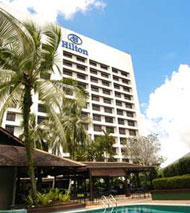
5 star & 4 star | Crowne Plaza Kuching | Hilton Kuching | Holiday Inn Kuching | Merdeka Palace Hotel & Suite | Grand Continental Hotel |
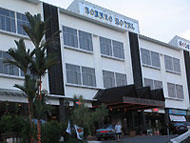
3 star & 2 star | Harbour View Hotel | Regency Rajah Court Hotel | Kingwood Inn | Telang Usan Hotel | Penrissen Inn | Borneo Hotel |
Budget Hotels | Mandarin Lodging Lodge | Kuok Pin Hotel | Fata Hotel | Laila Inn |
Guesthouses | B & B Inn | Borneo Bed & Breakfast | Pinnacles Kuching | Singgahsana Lodge | The Fairview |
Serviced Apartments | Grand Apartment Services | Somerset Gateway |

Damai Beach , Santubong

| Damai Beach Resort | Damai Puri Resort & Spa | Permai Rainforest Resort | Santubong Kuching Resort | Nanga Damai Homestay |

Bako National Park

| Park Accommodation |

Batang Ai National Park

| Batang Ai Hilton |

Trips and Packages

Kuching, Semengoh Orangutan Centre and Surroundings

| 3 Days 2 Nights Kuching Holiday Package | 4 Days 3 Nights Kuching Holiday Package |

Kuching and Outskirts

| 4 Days 3 Nights Kuching & Damai Beach Holiday Package | 3 Days 2 Nights Kuching City & Bako National Park Package | 4 Days 3 Nights Kuching & Batang Ai Longhouse Safari Package | 5 Days 4 Nights Kuching , Batang Ai and Bako National Park Holiday Package | 5 Days 4 Nights Kuching City & Iban Longhouse Back to Nature Package |

Other Parts of Sarawak

Miri Town ~ | Half Day Miri Town Tour | Niah National Park ~ | Niah National Park & Caves Day Trip | Lambir Hills National Park ~ | Lambir Hills National Park & Iban Longhouse Tour | Lambir Hills National Park Day Trip | Mulu National Park ~ | Royal Mulu Resort | 4 Days 3 Nights Package Mulu and Pinnacles Climbing Package | 2 Days 1 Night Mulu Caves Package | 3 Days 2 Nights Mulu Caves Package |


JM Travel Tools...
make your travel plans easier... use our tools!
how to advertise with us

journeymalaysia.com supports the following causes:

bornean sunbear conservation centre


Other Cultural Activities , Festivals and Arts , People

Festivals ~ | Thaipusam (Hindu) | Keng Chek Festival (Taoist) | Hungry Ghost Festival | Moon Cake Festival |

Cloth Weaving ~ | Songket Weaving | Pua Kumbu | Dastar of Sabah | Kain Tenun Pahang |

Street Markets/Art ~ | Little Penang Street Market |

Cultural Villages/Centres ~ Sarawak Cultural Village | Monsopiad Cultural Village - Sabah | Kampung Sumangkap (Gong making village) - Sabah | Kampung Gombizau (Honey Bee farm) - Sabah |

Traditional Sarawak houses ~ Bidayuh longhouse | Iban longhouse | Penan huts | Orang Ulu longhouse | Melanau tallhouse |

Sabah Peoples/Traditions ~ The Rungus |

We accept online payment for the following credit cards :