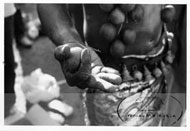
Thaipusam festival was held from 19th Night of January 2011 till 21st January 2011
For 2011 thaipusam in Penang photos |
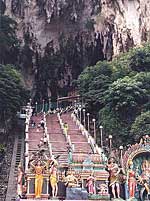 |
Once a year, Batu Caves become the centre of a great religious procession. Almost 1 million people pay homage to the highly revered deity, Lord Murugan during the 3-day long festival. Thaipusam falls on the tenth day of the month of Thai in the Hindu Almanac and that would usually be in late January or early February. For those who want to be there in the thick of things next year, click on to Calendar.
The story
A long, long time ago- the world was torn apart by an infernal war between the Devas (celestial beings) and the Asuras (evil forces). Tired of constant attacks from the Asuras, the Devas paid homage to Lord Shiva and asked for his protection. Moved by their plight, Lord Shiva agreed to help the hapless Devas.
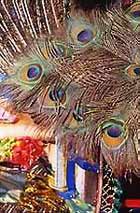 |
Lord Shiva opened the central eye on his forehead, radiating six sparks of fire. At the convergence of these sparks and through a series of celestial transformation, Lord Murugan appeared. He brought forward this powerful divine personality with elements of Himself and yet distinct from Him, powerful and brave enough to defeat the tyrannous Soorapadme - the meanest and most powerful of the Asuras. Armed with a Nyanya Vel (golden spear) presented to him by Lord Shiva, Lord Murugan went into battle with the evil force. A fierce battle ensued. Finally with one fatal stroke, Lord Murugan slayed Soorapadme. The divine converted one portion of the slain enemy into a peacock as his vehicle and the other portion into a cock adorning his banner.
 |
Lord Murugan, the son of Lord Shiva is considered the very manifestation of valour, beauty, youthfulness, vitality, masculinity, valour and the abode of happiness. Thaipusam celebrates the very essence of Lord Murugan and the power of good over evil.
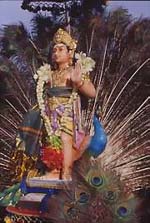 |
It is 11.30pm on the eve of Thaipusam, a time when the crowd is manageable and the cool night air brings forth a concoction of dizzy, soothing, intoxicating scents to slip us into a mood for a long, invigorating night. (The KTM trains and LRT schedules have been extended to shuttle devotees to Batu Caves to prepare for the day). For others it is to witness the arrival of the silver chariot carrying Lord Murugan heavily adorned with diamonds, rubies, sapphires and other precious stones. The deity is seated snugly on a bed of flowers encircled by burning incense on the chariot, which is pulled by two garlanded oxen and hundreds of devotees, also accompanied by religious dignities, musicians and dance (kolattam) groups. The silver chariot weighing all of 5 tonnes is transported through a 15km journey from town centre. The entourage leaves the Sri Mariamman Temple in Chinatown where for most of the year, the chariot and Lord Murugan's idol is housed for safekeeping. The journey takes 8 hours to complete. As the chariot arrives at Batu Caves, devotees carry Lord Murugan's idol up the 272 steps to the temple cave, an ascent of almost 185feet from the base of the steps.
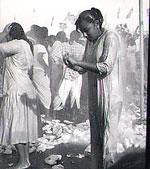
Meanwhile, at the bottom of the steps, devotees (and others who have come to earn some income) set up food stalls, fortune telling booths, paraphernalia counters, balloon stands and even shaving tents. One way of doing penance, especially for children is to shave the head (and facial hair for others). There are also other less obvious ways of fulfilling their religious obligations by means of preparing annadanam - food, generally rice and curry for devotees so that they don't go hungry. Or devotees can provide first aid or serve drinks and food and other essential services. The really serious pilgrims go all the way by carrying kavathi. There are a number of reasons as to why devotees would take a kavathi. Some seek to overcome bad karma, some as penance for their sins, and others to honour a vow. Those fulfilling a vow have, in the past asked for help such as birth of a baby, healing the sickness of a loved one, helping them pull through hard times and sometimes to help them through their studies. In return they have proposed to carry the kavathi if the request is fulfilled. There are, of course those who participate only to reaffirm their strength of faith.
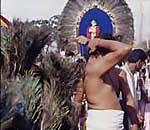 |
We followed a group of students who have come here this year to fulfil their vows to Lord Murugan for having granted them with favourable results in their studies. It is believed that if the vow is not paid, then misfortune will befall the person. We thought it a great idea to follow one group from the start of their journey to the end so that we could learn and witness the entire procession through their eyes for a better understanding. We were told that preparations began long before the day of Thaipusam. Each participant had to physically, mentally and spiritually prepare himself through a 48day fast - eating only one meal a day (strictly vegetarian), conduct prayers at home and at the temple, observe abstinence from carnal pleasures, observing 'mounam'(silence) as far as possible and even endure personal hardships such as sleeping on bare floor. However many do not observe such long periods of purification and the more experienced pilgrims may fast for only seven days or so.
Next Page For Thaipusam Festival cont'd...
Accommodation and Holiday Packages to Batu Caves
It is recommended to take day trips to Batu Caves from KL. Only 1/2hr - 45min car ride. Refer to Kuala Lumpur accommodation below for places to stay.
Accommodation and Packages to Kuala Lumpur , KLIA , Petaling Jaya, Damansara , Subang , Sunway, Putrajaya, Kuala Kubu Bahru , Kuala Selangor, Klang and Surroundings
Malaysia Cultural Activities, Festivals and Arts, People
Festivals |
| Thaipusam (Hindu) | Keng Chek Festival (Taoist) | Hungry Ghost Festival(Taoist) | Moon Cake Festival (Chinese) | Ari Muyang Hma' Meri (Orang Asli) | |
Cloth Weaving |
| Songket Weaving | Pua Kumbu | Dastar of Sabah | Kain Tenun Pahang | |
Street Markets/Art |
|
Cultural Villages/Centres |
| Sarawak Cultural Village | Monsopiad Cultural Village - Sabah | Kampung Sumangkap (Gong making village) - Sabah | Kampung Gombizau (Honey Bee farm) - Sabah | |
Traditional Sarawak houses |
| Bidayuh longhouse | Iban longhouse | Penan huts | Orang Ulu longhouse | Melanau tallhouse | |
Sabah Peoples/Traditions |
| The Rungus | |
 Getting There and Away
 Best Time to Go
 Historical site activities