It was a sunny morning and as we drove into a narrow dirt road we could hear a racket of metal smacking on metal. We parked and got out for a walk around. There were several
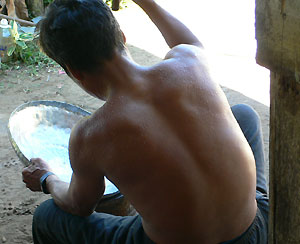 |
workshops along the way, which also doubled up as a shop. Already the masters and their trainees were hard at work. The dozen or so individual clanging of mallets on aluminum sheets were deafening. There are 2 ways of making the gong. One is to piece together separate flat sheets to form the shape of the gong. The other method, which is definitely more complicated, is to shape the gong from one large sheet of aluminum. This latter way requires skill, time and money. As for which creates a sweeter sound, only the maestros would be able to tell. According to Adrian, making gongs used to be a very private affair. In the old days, the gong maker would only work on his art when he was sure there were no outsiders to witness his craft. Otherwise, he would retreat deep into the jungle with his tools and materials to continue his work.
Entrance fee : RM3 is paid and collected for the cooperative that helps out the community. Visitors can also purchase ready made gongs of various sizes, even gong keychains for RM2 each.
Accommodation and Packages to Kota Kinabalu , Beaches, Nature and Highlands on the outskirts
Malaysia Cultural Activities, Festivals and Arts, People
Festivals |
| Thaipusam (Hindu) | Keng Chek Festival (Taoist) | Hungry Ghost Festival(Taoist) | Moon Cake Festival (Chinese) | Ari Muyang Hma' Meri (Orang Asli) | |
Cloth Weaving |
| Songket Weaving | Pua Kumbu | Dastar of Sabah | Kain Tenun Pahang | |
Street Markets/Art |
|
Cultural Villages/Centres |
| Sarawak Cultural Village | Monsopiad Cultural Village - Sabah | Kampung Sumangkap (Gong making village) - Sabah | Kampung Gombizau (Honey Bee farm) - Sabah | |
Traditional Sarawak houses |
| Bidayuh longhouse | Iban longhouse | Penan huts | Orang Ulu longhouse | Melanau tallhouse | |
Sabah Peoples/Traditions |
| The Rungus | |
 Getting There and Away
 Best Time to Go